

 Posted by
 Essence of significance (Part 8)
[Today’s column on “Significance” marks the 8th in the 10-part series on Universal intellectual standards for Critical Thinking, influenced by a book by Richard Paul and Linda Elder titled “Critical Thinking: Learn the Tools the Best Thinkers Use”. The earlier columns explored – with examples – the essence of Clarity, Accuracy, Precision, Relevance, Depth, Breadth, and Logic.]
My former headmaster, mentor, and friend – Francis L. Bartels – often comes to mind when the question of critical thinking is broached. He translated the Latin “homo sapiens” into Fante: “dwin dwin fo” – the thinking thinking man.
For him, everybody thinks, but a good many people do not think well enough; they find it quite difficult to separate the wheat from the chaff. His adoration for quality education for his students hinged on the transformational correctives to reverse that dilemma. He cajoled, coerced, and pushed the young people entrusted to his care to expand their thinking; expand their universe; and then expand themselves as great Africans to lead and support progress from the colonial Gold Coast to modern Ghana.
Significant choices
Considering that significance focuses on the quality of matters worthy of attention, decision making is most effective when thinking concentrates on the truly relevant information, ideas and concepts as they affect both individuals and the larger society.
Many ideas or problems may be significant to an issue, but not all of them may be equally weighted. When we fail to ask significant questions, one becomes mired in superficial enquiries, and stray off into deliberations of little weight or of no import.
For example, I often ask students to think about the way they spend their time and how much time they spend on significant versus trivial things. I ask, what is the most important goal or purpose you should focus on at this point in your life? And how much time they spend focused on it?
I ask, that they identify the mundane stuff such as appearances of the vanity variety, impressing friends and foes, and the like. The challenge is to reduce the quantum of time spend on trivial things and increase the amount of time, effort, and dialogue on the more significant matters.
Significant parliamentary issues
In 2021, adorations of “Ghanaian values” featured front, midfield and on the wings in the debate on homosexuality, etc. by the nation’s parliament, the honorable law making body of the land.
But are the following daily common practices included in the definition of Ghanaian values and are these not equally worthy of significant debates in parliament? One, female genital mutilation; two, the trokosi culture; three, ritual murders; four, adult male heterosexual “relationships” with small girls; five; teenage pregnancies; and six, the rampant corruption in high places, recorded in the auditor general’s reports over the years.
Should not these aberrations inform parliamentary and religious concerns as they crush the nation’s values?
The issue of child sexual molestation and defilement by heterosexual adults, for example, are hardly broached at the higher levels. Why not? The sexual abuses of very little girls tend to happen often by fathers, step-fathers, uncles, chiefs, teachers, pastors, prophets, and so on, but such matters – as significant as they are – are usually swept under the bed, and in some cases the culprits are humoured.
“The Missing Outrage”
But just do a survey – from the topmost titled women in this country to those on the lowest echelons – and you’d be surprised at the significant numbers of women sexually victimized in childhood. As Elizabeth Ohene wrote in October 2019: “I was seven years old, I was in Class Three and I was living in Abutia with my grandmother.”
In many cases, the defilement of little children is a taboo subject, and kept under wraps to “protect” the little victims and the larger families. But how many women are courageous enough to come out – in the open – to share the ordeal like Elizabeth Ohene, Maya Angelou, Oprah Winfrey, etc?
Aren’t these national issues significant enough to be discussed with utmost priority by our august bodies?
Teenage Pregnancies
Are teenage pregnancies some of our cultural values we wish to preserve? Children need to be helped to know when and how to protect themselves from attacks of rape, defilement, incest, etc. Such relevant education – at the start – may not protect all girls or prevent all teenage pregnancies, but will over time reduce the incidence and poor life outcomes for young girls.
Some statistics from Daily Graphic on-line revealed that an average of 112,800 teenage girls in the country are impregnated every year. In 2020, about 109,888 teenage pregnancies were recorded, with 2,865 of the girls between 10 and 14 years – below the age of statutory consent of 16 years.
According to figures collated from district health information management systems of the Ghana Health Service (GHS), Ghana recorded 555,575 cases of teenage pregnancy between 2016 and 2020, with 13,444 of the girls between 10 and 14 years.
This came to light at the commemoration of the 2021 year’s Africa Youth Day in Cape Coast, Central Region, on the national theme: ‘Safeguarding our teenage girls: A clarion call to action”.
Significance extracts order out of chaos, and isn’t the prevention of chaos a chief reason for the massive yearly budgetary outlay in the parliamentary system? Time to focus!
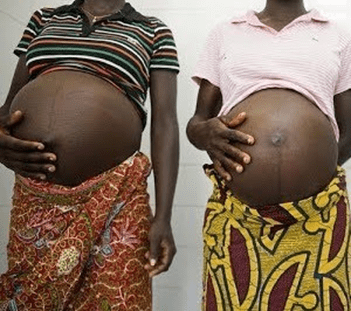
The pandemic of teenage pregnancy
Email: anishaffar@gmail.com
copyright© 2016-2024, anishaffar.org
Discover more from
Subscribe to get the latest posts sent to your email.
 anishaffar.org