

 Posted by
 In a significant way, Rev W.G.M. Brandful was unique. It must be said that he chose to give up the headmastership of Mfantsipim on principle. His refusal to mix education with partisan politics will turn out to be a great national legacy.
As a greenhorn, I remember him vividly back in September 1961. In the early mornings he parked his car in the dormitories area where students would not miss it. Then he paced down the road and stood where he too would be seen. With his back facing the Lockhart-Schweitzer building, he gained a panoramic view of Balmer-Acquaah, Pickard-Parker, Sarbah-Picot, and Freeman-Aggrey houses.
With sweeping glances from that vantage point, the dormitories could not escape his scrutiny. The student rush began in earnest. In a hurry, we tackled the staircases. Now out in the open, in his full view, we raced up the academic hill. At times, he’d climb up familiar hallways to clear stubborn and sleepy spots in particular dormitories. It was not till he was sure that no student had been left behind, did he follow uphill in his car. That was the early morning ritual.
With commitment and humility, he cut these deep impressions. His standards hung in the air like charms, and continued to assert themselves in the memory bank. Usually, he sported a white shirt and a tie. The long sleeves were fastened at the cuffs, and held back slightly from the wrists by means of armlets.
The Young Pioneers found a root at Mfantsipim just like the Voluntary Workcamp, Hi-Y, Drama Club, Christian Union, and other student clubs. They all attracted people of different tendencies who were free to join, and choose their campus leaders and activities. Meetings were held when needed in an atmosphere of tolerance and growth. What caused a revulsion on the campus was the CPP government’s command to now force the headmaster himself to wear the Young Pioneer scarf publicly.
This web was to be tangled as follows: the Assembly Hall was the set stage. All 600 or so students, plus the teachers, administrators, other staff members, and party aficionados would serve as the audience for the drama, with the headmaster in tow to leverage the props.
The order was conveyed behind closed doors, but at the morning assembly its full symbolic import was revealed. The headmaster, however, was to defuse the anticipated glamour: “They want to put the scarf around my neck, and I refuse it”.
The headmaster delivered the rebuttal in his soft voice. Like the apostles at the last supper, thus did Rev Brandful prepare the disciples for the beginning of his end. In that instant, he bared a nervy side never before seen in him. Often, he seemed supple and forgiving and dandy, and his shyness could fill the hall, but this particular defiance – like the calm before the storm – struck like a thunderbolt!
To begin with, the origin of the order was not quite clear as is typical with burdens of the sort. There were ghost screens everywhere. The origins were guessed, rumoured, and bandied about in whispers, and detested. But the order was not a joke! What had started off as a mirage hardened into a big risk. It allowed no breathing spaces. For his refusal to play the party game, the axe fell on him like an easy prey soon thereafter.
[Many years later, in his memoirs, The Persistence of Paradox, F.L. Bartels (Rev Brandful’s immediate predecessor) recalled: “Two headmasters of Mfantsipim had been removed from their post at the stroke of a pen: W.G.M. Brandful (1961 – 1963) by the Nkrumah Government and J.W. Abruquah (1963 – 1970) by the Busia Government”. Next, it was proposed that General Ignatius Kutu Acheampong “be made an honorary Old Boy of the school” to pacify his [military] regime.]
Rev Brandful’s resolve and subsequent demise shored up his image on campus. Few people practise what they preach; but when ideals are practised – in lieu of preaching them – that is the stuff of a superior calling. The admiration for him paled the moral sheen of the acting replacement who had been brought in, onto the stage, and done what the reverend had refused to do. The poor man courted respects, but found an uneasy bliss instead. The well had run dry, and the water was missed.
Perhaps the new man damned the whole episode himself, and wondered how he had been called and sucked into this vortex of blame and shame. Then again (who knows?) he desired the school to get over it all, and get on with the business of teaching and learning. If, in meaning well, he became the scapegoat, so be it.
That time, which in prospect appeared infinite, is now past. But in retrospect, Rev Brandful seemed constitutionally incapable of abetting. In his core, he loathed brute force: a practice owing more to a diktat than compromise and consensus. As he saw it, the apparatchiks sought to stalk, provoke, and destroy.
The incident smacked of the authoritarian culture that has crippled new and old societies for centuries, and which had now arrived at Cape Coast, at the gate of Mfantsipim. How many times must cannonballs fly before they are forever banned? Seeing the shackles forged and brazed, and looking about him and finding no one there to help, Rev Brandful filled the sacrificial shoes himself. His soft voice resonated, to block the repulsive. As it were, he stood at the gateway, a lone figure, quite petite in physical stature, but gigantic in resolve and in spirit.
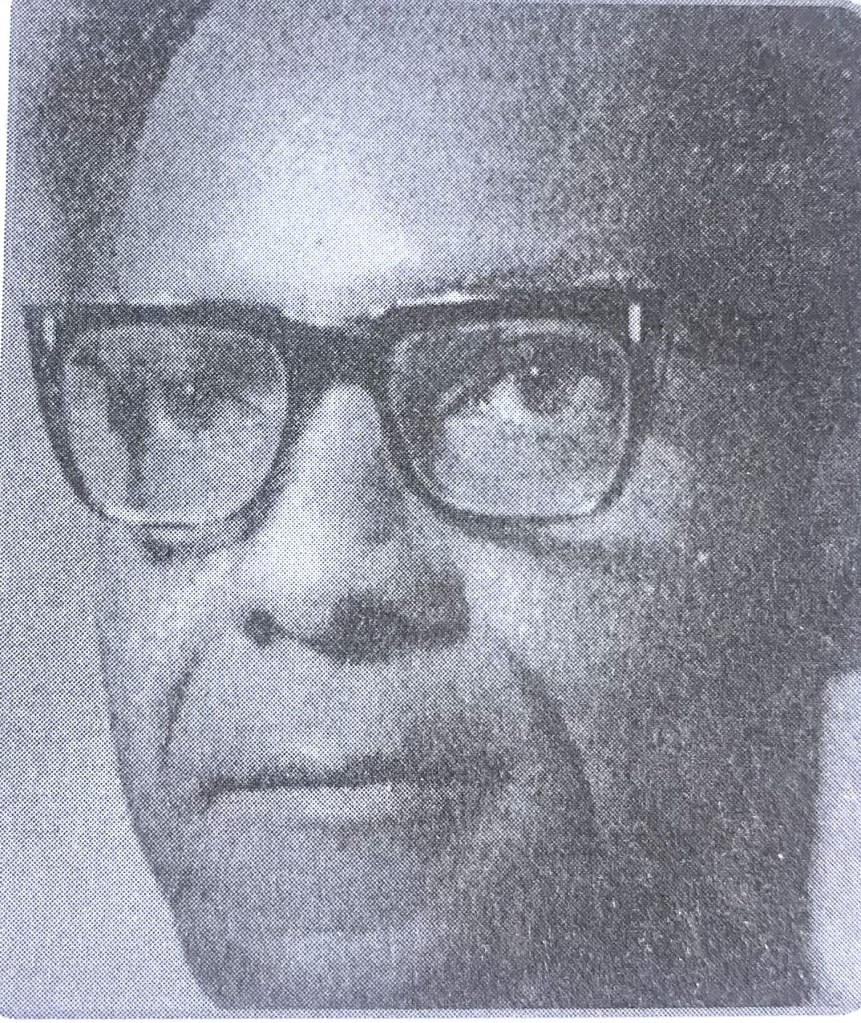
His moral courage beamed down the Kwabotwe hill, resplendent, but uncompromising in fending off the offensive. It was the fortitude of a tender-hearted man at his peak, with no physical means whatsoever, except his bare limbs and the ember of an unyielding spirit. That moment must be seen, held, and mounted in the annals of the school. The ideal – bequeathed to our alma mater – made it more precious still.
In the pursuit of reason, education instinctively thrives best through the freedom of thought. The benefits of independent thinking contrast sharply with parochial or herd thinking. It is a low blow indeed when the terrain is drawn into hostilities. Looking back, the headmaster performed an over-arching task for posterity; namely, the separation of education and partisan politics. With utmost grace, he elevated his status in spite of the odds.
The likes of Rev Brandful are infrequent. He was a product of a good school. Any sly, queasy operator might have measured, inaudibly, to harness the apparatchiks’ largesse for his purposes. But he cast those trappings to the side, and emerged above the fray. All that happened long ago, but the model lives on like the clean air that fills the lungs and nourishes the body.
Such higher reaches are not new; at least the summit can be viewed from the distance, but to get there is difficult. The occasions to rise to the top can be steep, rough, and dangerous at times. It is easier to fall by the wayside, trounced. The few who succeed are incarnate, and exceptional. In one swoop, they provided for mythology the models of ideals and proprieties, and for history the evidence of rock-solid truths. Such men and women are greater treasures than silver and gold.
In taking stock of history, old prejudices, fanaticism, uncomfortable truths, censures, and errors are gleaned. When questions, judgments, and speculations arise, the past stood ever so near, and was the counselor upon whom to rely the most. Time guides the way forward in appreciating our historical figures – right, wrong, or indifferent. But it is enlightening, as the reverend’s own life showed, when the way forward is paved with conscience.
Rev Brandful chose the right arena, fought there, prevailed, and widened the territories for emulation. He kept his “place” (as John Wesley of Methodism put it) not as “a poor perishable wreath, but a crown that fadeth not away”. It is always joyful and inspiring, on visiting Morning Star School (Accra), and seeing his name engraved on the plaque commemorating that school. The good that people do lives after them after all.
Email: anishaffar@gmail.com
copyright© 2016-2025, anishaffar.org
Discover more from
Subscribe to get the latest posts sent to your email.
 anishaffar.org