
 Posted by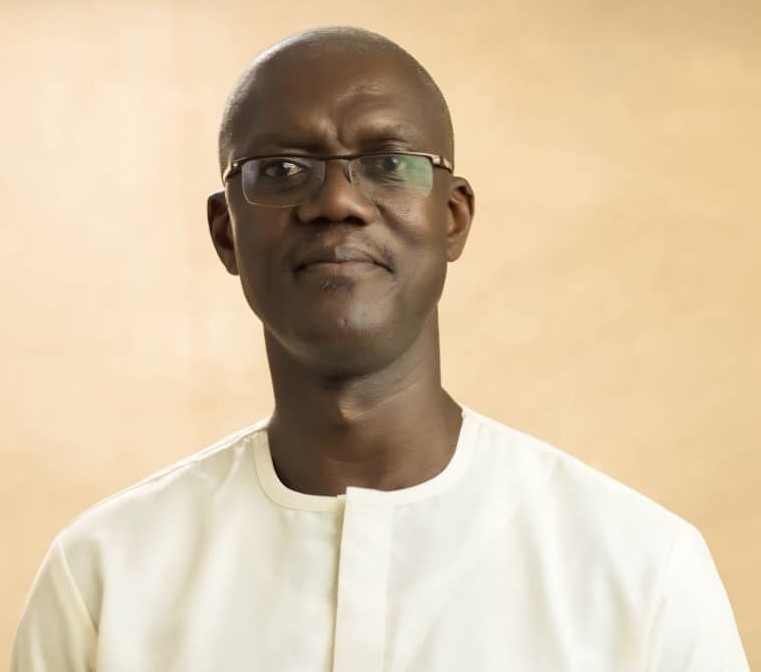
The article featured on this blog today represents the thoughts and insights of Dr. Mantey Jectey-Nyarko. Dr. Mantey is a lecturer at the Department of Painting and Sculpture at KNUST in Kumasi, and an educator with 25 years of experience teaching at almost every level in Ghana.
Disconnected dots
As an artist, my training over the years has groomed me to observe relationships of tangible and intangible things in the environment. In creative practice, no idea stands alone. Form borrows from mathematics, meaning leans on history, and technique most often rests on science. It is from this habit of seeing connections that I look at Ghana, educational system, especially at the High school level, and worry about how narrow knowledge is framed in our teaching and learning process. Our schools have become efficient at separating subjects, but less successful at teaching students how ideas from various subjects interrelate to generate solutions for problems in the society.
The structure of the system encourages early specialisation where students, at a tender age, are channelled into programmes that teach them to focus intensely on a limited set of subjects, often with little or no encouragement to draw insight from other subjects. Success is usually measured by examination performance and certification, not by the ability to connect knowledge and skills meaningfully. This approach is bound to limit reasoning because the critical generating of practical solutions can never be achieved in the confines of just one discipline.
Evidence from 2025 WASCE results
The 2025 West African Senior School Certificate Examination results have, perhaps inadvertently, exposed the consequences of this approach. In recent years, a worrying trend of weak performance has consistently appeared in Core Mathematics and Social Studies. This started when questions moved from the known rigid procedures of straightforward calculations to those that require inference, interpretation, and engagement with real-life situations. Candidates readily manage routine calculations or memorised responses, but struggle once asked to reason through unfamiliar contexts, interpret data, or apply concepts to social realities. The Chief examiners’ reports have repeatedly highlighted the weaknesses in logical reasoning, interpretation, and application rather than gaps in the coverage of the syllabus (WAEC, 2021).
Mathematics, by its nature, is not merely about arriving at correct answers but about structured thinking, inference, and problem-solving. Social Studies, similarly, is not intended to reward rote learning but to assess a learner’s ability to analyse social conditions, weigh evidence, and make informed judgments. The failure of a large number of candidates to address these points suggests a deeper systemic issue. The simple question to be asked is, do these results expose cracks in an educational system that has been over-compartmentalised and overly procedural?
Evidence increasingly suggests that over the years, inspite of the constant chorusing of the “Critical thinking and Problem solving” mantra, it ends at the stage of words. Students are still being trained to recognise question formats rather than to think through problems. Knowledge is presented in sealed compartments, which seldom require learners to draw on ideas from other subjects to help in reasoning. Where the questions move into skills they have not been deliberately taught to practice, the outcome usually becomes predictable and recurring failure (World Bank, 2022).
This weakness extends beyond Mathematics and Social Studies. In the sciences, it is not uncommon to see how formulas are memorised at the expense of engagement with local environmental, technological, or health challenges. In language and literature, comprehension and argumentation are taught largely within the boundaries of the subject, without systematic links to civic reasoning, scientific communication, or ethical debate. UNESCO (2021) has repeatedly issued warnings on how such compartmentalised learning results in surface competence rather than deep understanding.
Art, which I know most intimately, reflects this same problem. Visual Art, which has been overly fragmented and compartmentalised along strict lines of materials and techniques, is frequently treated as a hands-on elective, having very little relationship with Mathematics, History, or Science. Yet proportion, measurement, balance, and structure are mathematical ideas. Colour, light, and materials draw directly on physics and chemistry. Symbols, motifs, and forms are rooted in social history and belief systems. When art is isolated, it loses intellectual depth. When other subjects are isolated from artistic thinking, they lose imagination, interpretation, and flexibility.
The evidence from the recent WASSCE results, therefore, points not to student failure, but to design failure. It reveals a contradictory system that values compartmental mastery while neglecting knowledge and skills transfer. It is caught up in a whirlpool where students are taught within tight boxes and assessed on their ability to think beyond them. This contradiction lies at the heart of the problem.
The need for transdisciplinary thinking
Across developing contexts, educational reform is moving in a different direction. Increasingly, subjects are viewed as tools for reasoning and problem-solving rather than as ends in themselves. The OECD (2020) notes that systems which prioritise synthesis, interpretation, and application are better aligned with the demands of contemporary society. The African Development Bank Group (2023) similarly stresses that relevance in the modern economy depends on integrated skills, adaptability, and creative reasoning.
This is where transdisciplinary thinking becomes unavoidable. In an emerging transdisciplinary society, problems do not present themselves as Mathematics, Social Studies, Science, or Art. They come as situations that can be solved by the collective reasoning of experts who are alive to the knowledge and skills of each other and how they can collaborate to generate workable interventions. The basic job market demand of the next generation is the ability to make informed decisions out of collaborative reasoning across a wide range of human and sociocultural challenges. Climate change, youth unemployment, urban congestion, and cultural preservation, among others, demand quantitative reasoning, social analysis, ethical judgment, and creative insight working together (Darbellay et al., 2021). Preparing students for such realities requires deliberate curricular and assessment reform.
Aligning curriculum
For curriculum developers, this means rethinking how subjects are framed and taught. Greater emphasis must be placed on shared concepts such as reasoning, interpretation, evidence, and application across subjects. For examination agencies, particularly WAEC, it requires alignment between assessment demands and classroom practice. If examinations increasingly test deductive reasoning and real-life application, teaching and learning will be purposeful in cultivating these skills across subject boundaries. From an artist’s standpoint, the lesson is clear. Education must train the mind to connect. Specialisation has its place, but when it arrives too early and too rigidly, it weakens reasoning and limits relevance. The struggles of WASSCE candidates with applied and deductive questions should not be dismissed as isolated performance issues. They should be read as a warning. This is the moment to re-examine the interrelatedness of subjects in Ghana’s high schools and to redesign learning so that students are equipped not only to pass examinations but also to think, adapt, and contribute meaningfully in a transdisciplinary world.
Email:anishaffar@gmail.com
copyright© 2016-2026, anishaffar.org
Discover more from
Subscribe to get the latest posts sent to your email.
 anishaffar.org