

 Posted by
 Guest Contributor: Dr. Alfred Patrick Addaquay.
For generations, Western music theory has treated the human voice as a musical instrument. In classrooms and conservatories, students are taught that the voice is the “original instrument” — just like a piano, violin, or flute. It produces sound. It has pitch. It can be trained, categorized, and analyzed. Therefore, it must be an instrument. But what if this long-standing assumption is not universally true?
In my article published in African Identities (Taylor & Francis), titled “Reclaiming the African Voice beyond Eurocentric Instrumental Taxonomies,” I argue that this widely accepted idea does not accurately reflect how the voice is understood in many African cultures.
The issue is not whether Africans sing. Of course they do. African music is rich, vibrant, and deeply melodic. But the question is deeper: What is the voice understood to be?
The Voice as a Person Rather Than a Tool
In Western music systems, the voice is often treated as a tool for producing melody and harmony. It is classified by range — soprano, alto, tenor, bass. It is trained for tone quality and technical precision. It is expected to function like other instruments in an ensemble.
However, in many African traditions, the voice is not seen primarily as a tool. It is seen as an extension of the person. The African voice does much more than create melody. It tells stories. It preserves history. It calls ancestors. It prays. It protests. It teaches. It celebrates. It mourns. It connects people.
In many communities, singing and speaking flow into one another so naturally that it becomes difficult to separate them. A performer may begin in song and shift seamlessly into speech. A praise singer may chant history while maintaining musical rhythm. A gospel leader may sing, then suddenly speak to the congregation, then return to melody — all within the same performance. The voice does not remain fixed in a single “musical” role.
Ululation — that high, expressive vocal trill heard in many African ceremonies — is another example. It carries emotion, identity, and communal energy. It is not simply “sound production.” It is communication. Even in art music, choral music, or gospel settings — where the voice may sometimes function melodically — it does not always remain in that instrumental role. It may shift back into storytelling, exhortation, invocation, or testimony. The voice moves between musical and social functions. It is fluid.
The Consequences of Universal Assumptions
So why does this matter? Because when Western music theory assumes that its classifications are universal, it can unintentionally misrepresent other musical cultures. If the African voice is forced into purely instrumental categories, several things happen.
In music education, oral traditions may be overlooked. Call-and-response practices may be sidelined. The blending of speech and song may be misunderstood. Students may be taught to prioritize Western vocal techniques over indigenous methods of learning and expression. As a result, they may lose connection to their cultural heritage.
In performance practice, forcing African singers into Western “instrumental” models can strip away important elements such as natural vocal timbre, flexible rhythm, speech inflection, and embedded storytelling. What remains may sound polished — but it may no longer sound authentic. The problem is not that Western music theory is useless. It has its value. The problem arises when it is treated as universally applicable to all cultures without question.
The Hornbostel-Sachs system, for example, classifies musical instruments based on how they produce sound. But even within that framework, the human voice does not fit neatly. It is not a manufactured object. It is part of the body. It carries language and identity. African scholars such as J.H. Kwabena Nketia, Meki Nzewi, and Kofi Agawu have long emphasized that African music must be understood within its own cultural logic. Categories imposed from outside can distort meaning.
Redefining the Voice in Global Music
My argument is not that the African voice can never function like an instrument. It sometimes can. In certain contexts — such as choral arrangements or composed art music — it may operate melodically in ways that resemble instrumental behavior. But it is not always that. And that difference matters.
When we recognize that the African voice is not merely a sound-producing device but a living expression of language, spirituality, and community, we begin to see music differently. Music becomes more than organized sound. It becomes social action. It becomes history carried in breath. It becomes identity expressed through vibration.
Ultimately, this article is a call for intellectual balance. It asks scholars, educators, and performers to reconsider whether long-held assumptions in music theory truly apply everywhere. The African voice challenges us to rethink what music is — and who gets to define it. Because sometimes, what seems like a universal truth is simply a local theory that traveled too far.
And perhaps the most important question is this: If the voice speaks, remembers, teaches, prays, and connects — can we honestly reduce it to just an instrument?
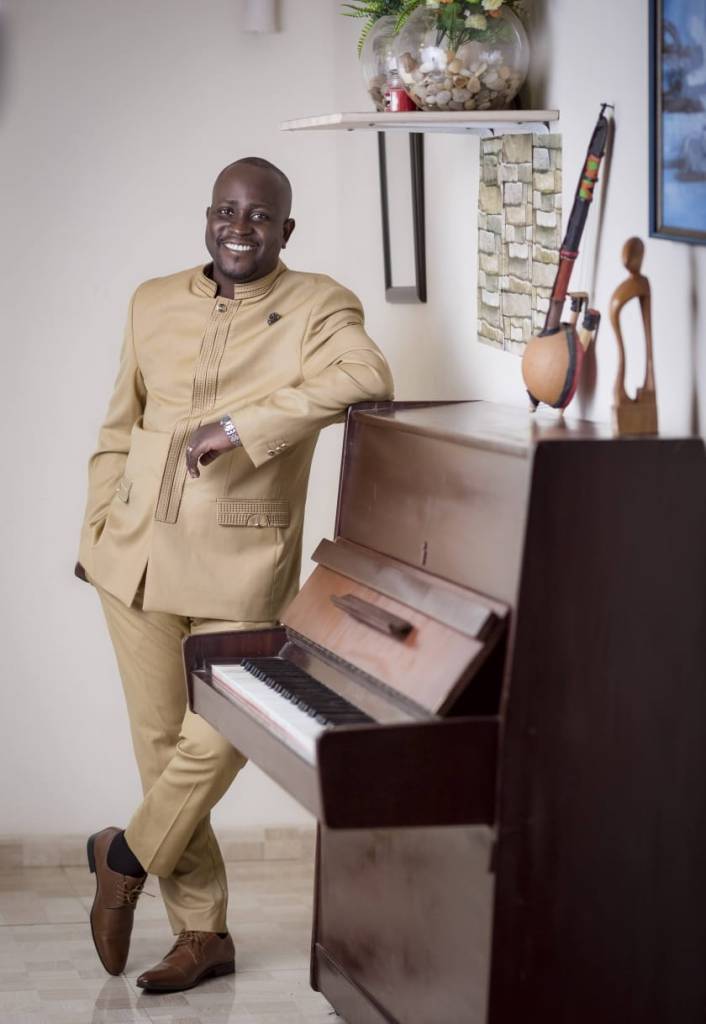
Dr. Alfred Patrick Addaquay
Email:anishaffar@gmail.com
copyright© 2016-2026, anishaffar.org
Discover more from
Subscribe to get the latest posts sent to your email.
 anishaffar.org