

 Posted by
 Guest Contributor: Malcolm Osei Tutu, Crown Prince Academy.
Across the African continent and its diaspora, the notion that discipline requires pain has become almost instinctive. In homes from Accra to Atlanta, the threat of a whipping is often treated as a marker of authority and love. Phrases like “spare the rod, spoil the child” or “mama gone whop you” capture this paradox: generations of African and Black-descended peoples have come to see violence as both necessary and natural. Yet this association is not indigenous; it is a colonial inheritance misread as culture.
From Communal Harmony to Colonial Control
Before colonial intrusion, African societies nurtured children through communal systems of care, not fear. In Akan, Yoruba, and Igbo communities, children were the responsibility of the extended family and the wider village. Discipline relied on storytelling, mentorship, and communal labor — methods designed to restore balance rather than punish. The South African ethic of Ubuntu, meaning “I am because we are,” reflects a worldview in which moral development is inseparable from the collective wellbeing. As John Mbiti notes, the child who strayed from social norms was guided back into harmony, not beaten into submission.
Colonialism and missionary education disrupted these traditions. European administrators and teachers — products of authoritarian schooling themselves — equated obedience with divine and civilizational duty. They treated the Biblical proverb “spare the rod and spoil the child” literally. Whipping became moral instruction, submission a sign of virtue. Andrew Rush, in Spare the Rod, Spoil the Colony (2019), documents how colonial schools in Kenya relied on public corporal punishment to “civilize” children and train them for subservience. The body itself became a site of authority.
Through such institutions, violence gained legitimacy. Generations of African parents and teachers internalized the lesson that love must be hard, that authority must hurt, and that silence is respect. By independence, the logic of the rod had been absorbed: we reproduced the oppressor’s behavior, believing it to be our heritage. Psychologically, this is a case of internalized oppression, in which dominated peoples adopt the values of their oppressors. Frantz Fanon emphasized that colonization does not end with the withdrawal of foreign troops; it continues in the colonized psyche. When we raise children through fear, when obedience is mistaken for care, we perpetuate that legacy.
The Impact on the Individual and the Society
The pattern extends beyond Africa. Enslaved African Americans and Caribbean peoples often had to discipline their own children harshly to protect them from harsher punishments by slaveholders. In this context, violence became a grim surrogate for love. Today, jokes and sayings like “I got whooped and I turned out fine” reflect not resilience but normalization of pain. Modern science supports this observation. Gershoff and Grogan-Kaylor (2016) show that corporal punishment does not improve behavior; it increases aggression, anxiety, and mistrust. UNICEF data in sub-Saharan Africa confirm that children subjected to violent discipline are more likely to experience depression and lower educational outcomes. The rod raises wounded, not better, individuals.
The inheritance of the rod is not confined to the household; it resonates in governance and development. Colonial administrations enforced authority through fear, teaching that power is maintained by coercion rather than consent. Over generations, this mindset was internalized. Citizens and leaders alike often see obedience as respect and dissent as threat. Schools, workplaces, and governments mirror the family structure: hierarchical, punitive, and controlling.
This internalization affects development. A society that conditions its citizens to fear authority fosters compliance but stifles creativity and initiative. Teachers, civil servants, and entrepreneurs who operate under fear-based norms tend to avoid risk, innovation, or critical engagement. Leaders shaped by these patterns may reproduce authoritarian practices, discouraging participation and civic engagement. Economists and political theorists such as Dambisa Moyo and Achille Mbembe argue that these cycles inhibit independent thought and collective problem-solving, creating societies dependent on top-down control rather than collaboration. The colonial rod, once external, has become embedded in the psychology of authority.
Psychological and Cultural Decolonization
Understanding this inheritance reveals why the challenge is both personal and societal. Undoing it requires more than policy; it demands psychological and cultural decolonization. Traditional African methods of correction — mentorship, dialogue, restorative practices — offer a blueprint. Reorienting authority around guidance and care, rather than fear, can help dismantle patterns of compliance and mistrust that impede social cohesion and innovation.
The inherited rod, therefore, is more than a household concern; it is a metaphor for the broader internalization of oppression. Violence, once imposed externally, becomes mistaken for culture and identity. Our struggle is to reclaim moral and psychological sovereignty: to teach care without coercion, to govern without fear, and to build societies that prize empathy, dialogue, and participation.
Our ancestors’ wisdom did not need the rod to create communities of respect, cooperation, and moral balance. Returning to these principles is not an exercise in nostalgia; it is an act of liberation. Until we unlearn the violence we have mistaken for culture, our independence — personal, civic, and national — will remain incomplete.
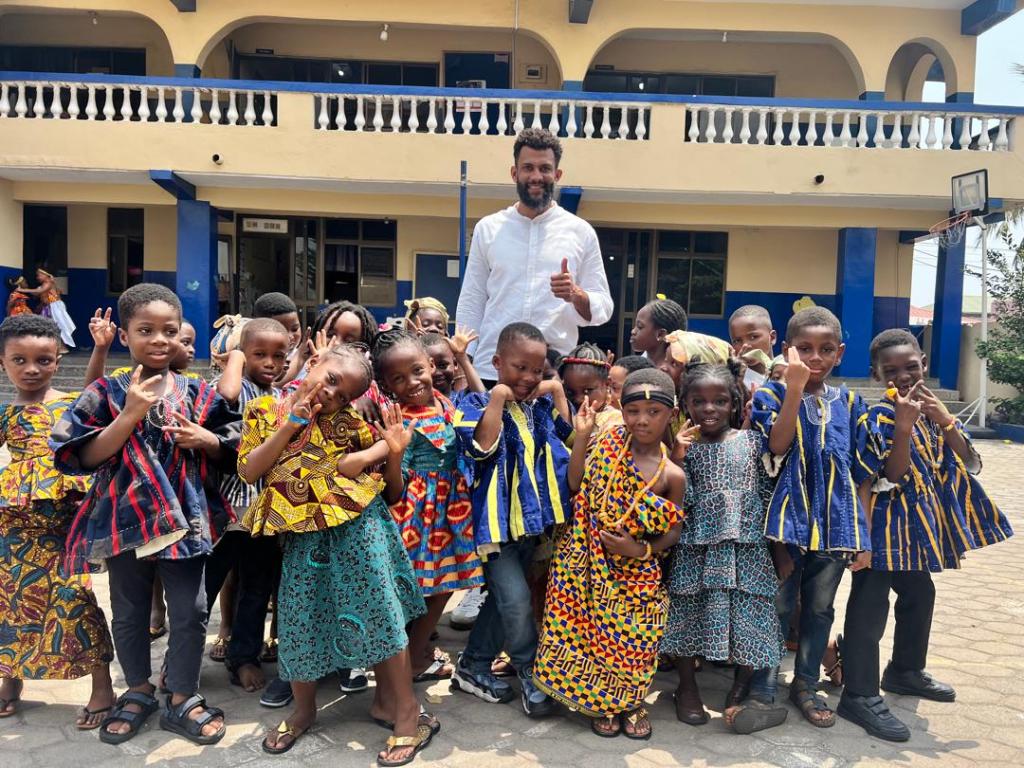
Malcolm at Crown Prince Academy
Email:anishaffar@gmail.com
copyright© 2016-2026, anishaffar.org
Discover more from
Subscribe to get the latest posts sent to your email.
 anishaffar.org