

 Posted by
 There is a telling joke currently making the rounds about Ghana and Nigeria. It goes like this: while Nigeria’s Delta region is devastated by oil spills, and Ghana’s galamsey crisis openly ravages our vital ecosystems—destroying forests, cocoa farms, and water bodies—the most passionate debate raging between these two stressed nations is, “Who makes the better Jollof rice?”
It is a sobering thought. These are two of Africa’s most pivotal nations—Ghana being the first in sub-Saharan Africa to achieve independence in 1957, and Nigeria standing as the continent’s most populous nation and largest economy. Yet, our collective national priorities too often drift toward triviality while environmental emergencies unfold right before our eyes.
The Promise of a “Green Ghana”
It was deeply encouraging to read the headline in the Daily Graphic (June 14, 2021): “Green Ghana project to be institutionalised.” I jumped for joy upon reading further that June 11th each year would coincide with the World Day of Forests, ensuring that the over five million newly planted trees would be properly nurtured into maturity.
It was refreshing to see ministers, public officials, and civic organizations join hands to support the Ministry of Lands and Natural Resources in this exercise. This vision of environmental stewardship reminiscent of Osagyefo Dr. Kwame Nkrumah, who established the Ministry for Parks and Gardens in February 1965.
During that very same decade, while I was a Form Four student at Mfantsipim, the visionary Lee Kuan Yew of Singapore introduced his nation’s transformative “Clean and Green” movement. He surmised that a burgeoning nation needed a dedicated department within the Ministry of National Development specifically tasked with the care of trees after they had been planted. The core philosophy was simple yet profound: ecological balance is non-negotiable for protecting public health and human dignity.
A Factory Wrongly Sited
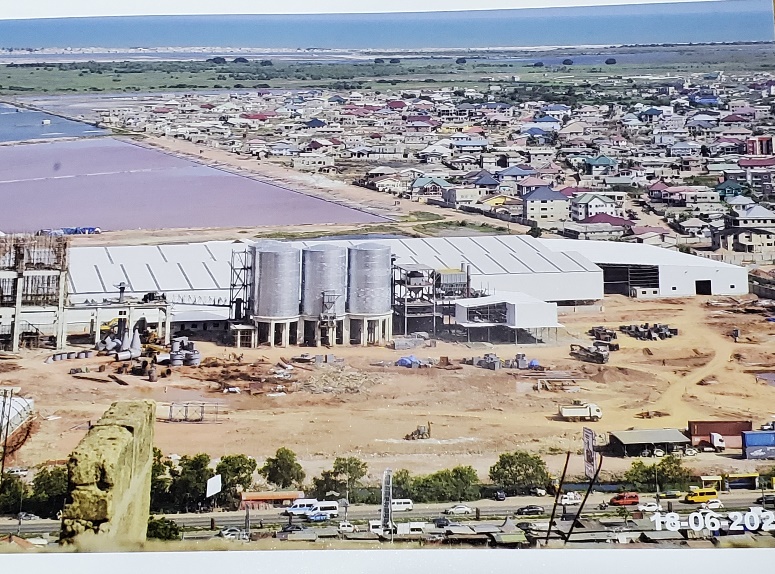
It is precisely this principle of environmental protection that justifies the intense protests and sustained media scrutiny surrounding the Empire Cement factory.
Before embarking on construction, it is highly doubtful that the owners of Empire Cement genuinely engaged the surrounding communities. Members of the McCarthy Hill Residents Association were shocked by the sheer speed and nocturnal aggressiveness of the construction.
Ultimately, the residents of Tetegu, Weija, Upper and Lower McCarthy Hill, Gbawe, and Mallam within the Weija constituency stand to become the primary casualties. They face severe fallout from air pollution, alongside the daily traffic hazards posed by heavy-duty haulage articulators navigating the narrow, congested McCarthy Hill traffic light intersection.
This situation must serve as a wake-up call for state officials and concerned citizens. Environmental degradation is happening on our blind side.
Prevention is inherently better than cure. It is far more sensible to halt the wanton destruction of our ecosystems than to attempt a costly, often futile restoration once the ruin is already absolute.
Engineering Floods and Disruption
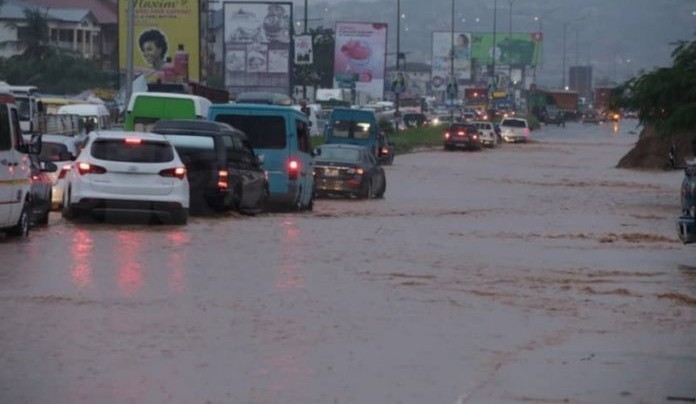
To construct the Empire Cement factory, lowlands and wetlands were aggressively filled to street level. In doing so, the developers upset the local ecological balance, transforming the area into a man-made flood zone. The plot was built up to such an extent that the primary road has now effectively become the lowest point of drainage. One can only shudder to estimate the public cost required to redirect these new artificial floods away from the highway.
The consequences are already evident:
- Severe Traffic Gridlock: The factory has severely exacerbated flooding along the lower McCarthy Hill and Gbawe stretch of the main Accra–Winneba Road.
- Regional Disruption: During the slightest rainfall, commuters bound for Cape Coast, Takoradi, and neighboring Côte d’Ivoire face massive delays.
- Infrastructure Decay: This critical West African highway—which is relatively new—is already beginning to disintegrate into potholes due to standing floodwaters.
The Silent Killer: Air Pollution
Beyond structural damage, the human cost is alarming. Air pollution is one of the fastest-rising causes of chronic illness in Ghana, directly implicated in rising cases of asthma, respiratory failure, and cardiovascular disease. Because air pollutants travel vast distances, a factory of this nature places communities far beyond the immediate site at grave risk.
The chemical processes involved in cement production release toxic particulate matter and noxious gases. While heavy industries are vital for national development, they must, by law and common sense, be sited far away from densely populated residential areas.
A Time to Support the EPA
Minor instances of regulatory neglect may seem trivial in isolation, but in the aggregate, they culminate in major national calamities.
It is astonishing that the policymakers and parliamentarians entrusted with maintaining our roads and protecting public welfare stood by silently while this environmental infraction occurred. It is a stark reminder that short-sighted leadership compromises the integrity of the state. How can a heavy industrial cement factory be permitted right next door to an edible production facility, with total disregard for the ecology, local residents, and international traffic? It defies logic.
Email:anishaffar@gmail.com
copyright© 2016-2026, anishaffar.org
Discover more from
Subscribe to get the latest posts sent to your email.

